





| Buy from US |
Buy from UK |
Buy from DE |
Buy from IT |
Buy from FR |
Buy from ES |
Buy from JP |
 |
 |
 |
 |
 |
 |
 |
What Are Sewable Electronics?
Sewable electronics combine traditional craft processes (sewing, fashion design, and textile design) with electrical engineering, computer science, and hardware skills.
With sewable electronics, you can create e-textiles (electronic textiles), which are often wearable, flexible projects that look less like traditional electronics and more like craft and art projects. Many e-textile projects replace wiring with flexible conductive materials such as conductive thread and fabric. For the projects in this guide, we will be sewing circuits together with conductive thread.
What Is LilyPad?
The LilyPad system is a set of sewable electronic pieces designed to help you build soft, sewable, interactive e-textile projects. Using LilyPad pieces is a great way to experiment with electronics through the lens of crafting. Each LilyPad piece has large conductive sew tabs for easy sewing and a rounded shape so it won’t snag fabric or cut thread.
What Is Conductive Thread?
Conductive thread is a specialty thread made with stainless steel fibers. It can be used instead of copper wiring to connect LilyPad (or other e-textile) pieces together to form circuits.
Sewing with Conductive Thread
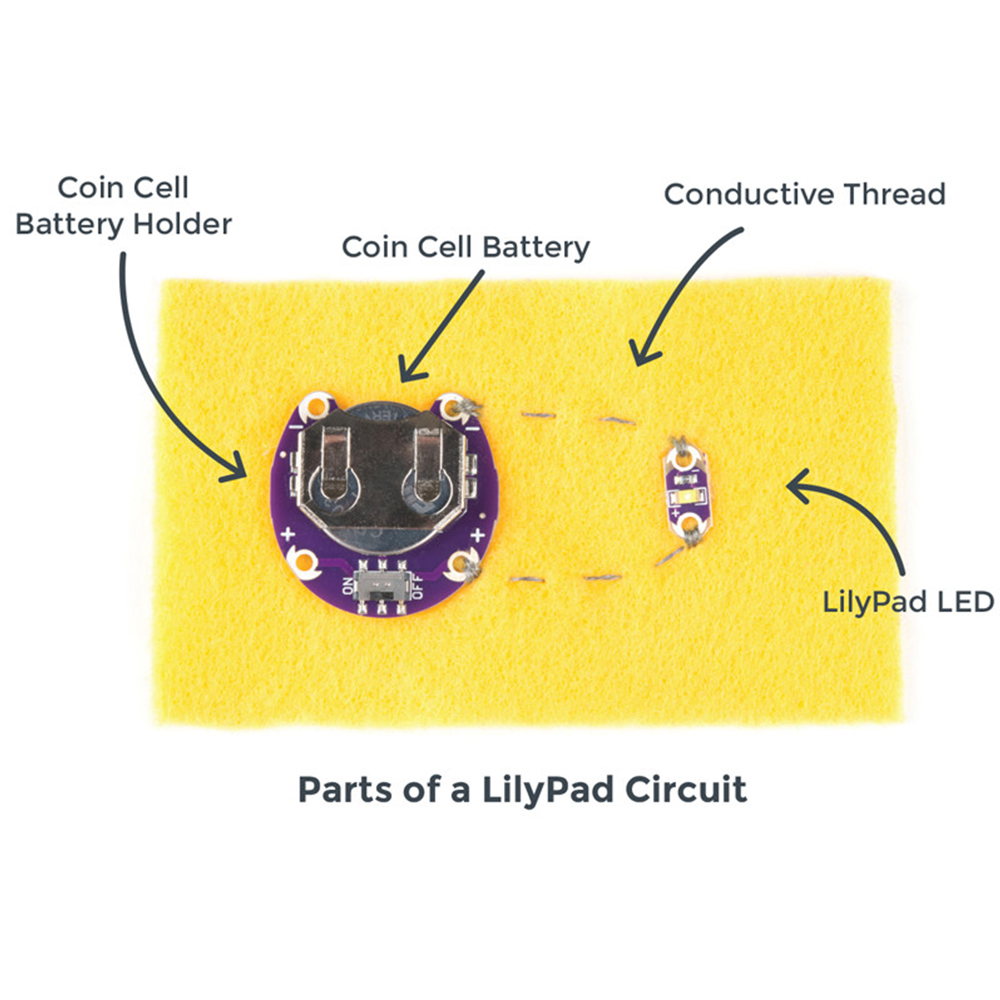
The examples in this tutorial walk through creating a conductive thread circuit connecting a LilyPad Coin Cell Battery Holder to LilyPad LEDs. These techniques are useful for connecting any LilyPad pieces together.
Most LilyPad projects use conductive thread to complete electrical circuits. The following sections introduce you to some basic sewing techniques as well as a few special tips for using conductive thread to build working circuits. Even if you’re already familiar with needle and thread, this section may still be useful — especially where it covers sewing with LilyPad parts.
Securing Your Components
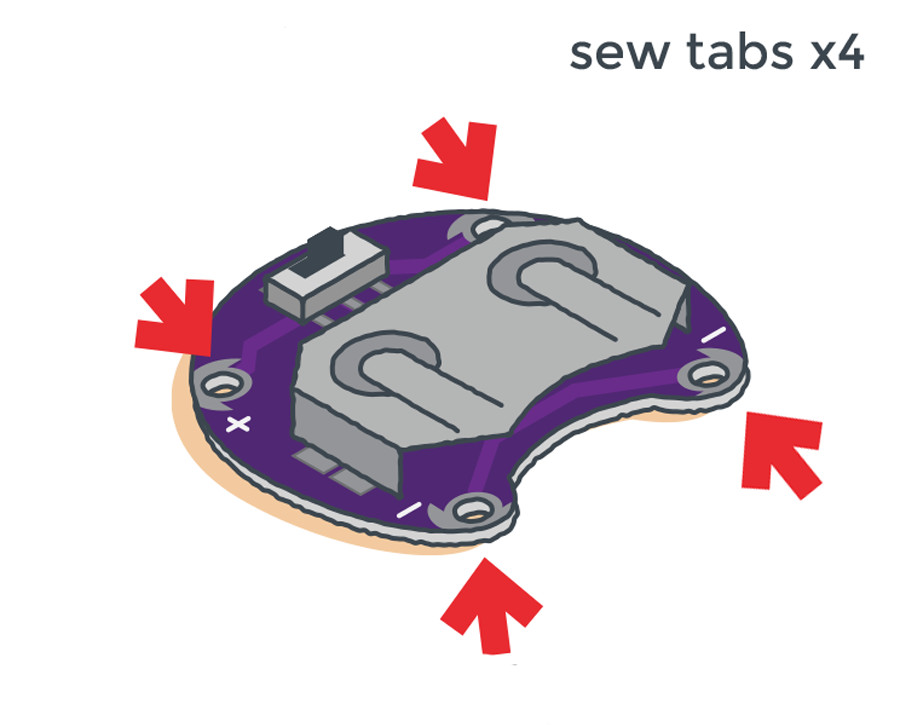
Each LilyPad piece has large holes with conductive silver pads called sew tabs. These tabs are designed to give you plenty of room to pass a needle and thread through the hole several times. Before you begin stitching your circuit, identify the sew tabs you would like to connect and orient them so they are easily accessible in your design. If you are following a SparkFun template, the pieces will have a specific location on the design for both ease of sewing and visual appeal.
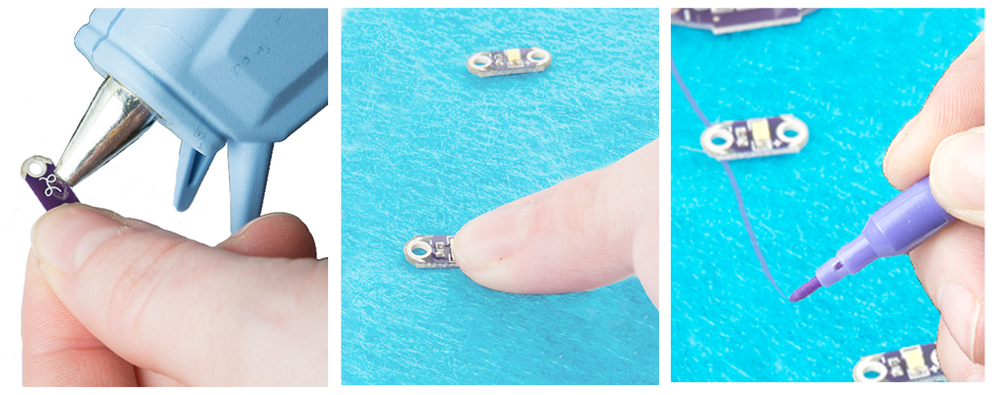
We recommend using a small dot of hot glue (preferred) or fabric glue to attach each LilyPad piece to the fabric to keep it from moving while you sew. Be careful not to accidentally seal up the holes in the sew tabs.
Connecting To LilyPad Sew Tabs
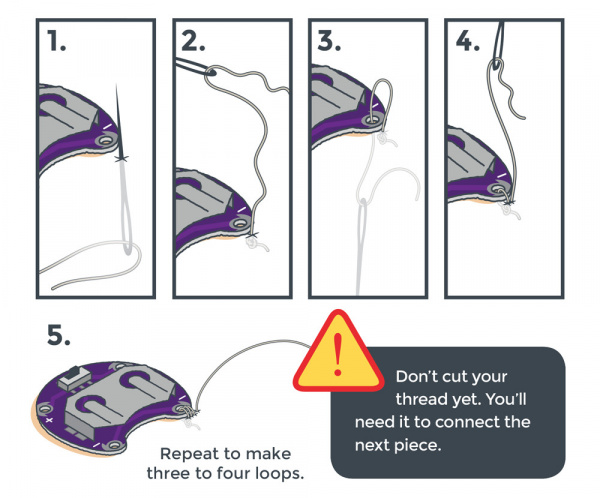
We’ll stitch conductive thread around LilyPad sew tabs in our circuits to connect the pieces together. Make sure to loop the thread three to four times around each sew tab and pull it snug with each pass. This ensures a strong electrical and physical connection between the thread and the sew tab. Pull the loops tight before continuing your stitch.
Sewing Basics
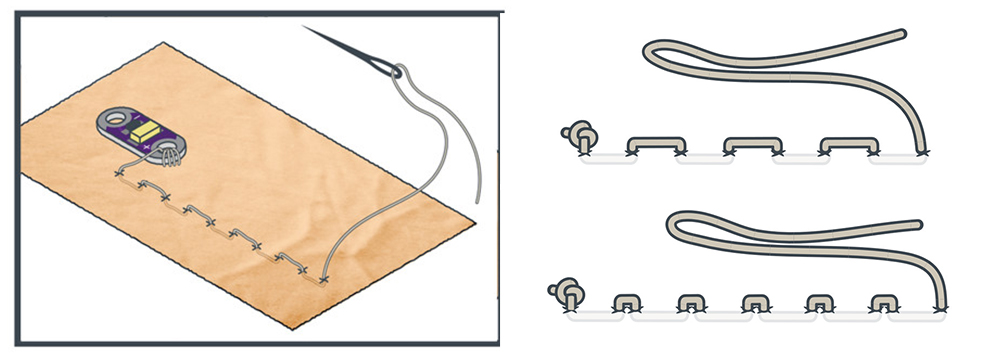
After looping around a sew tab, a running stitch lets you connect LilyPad pieces together with a continuous length of conductive thread.
Running vs. Hidden Stitch
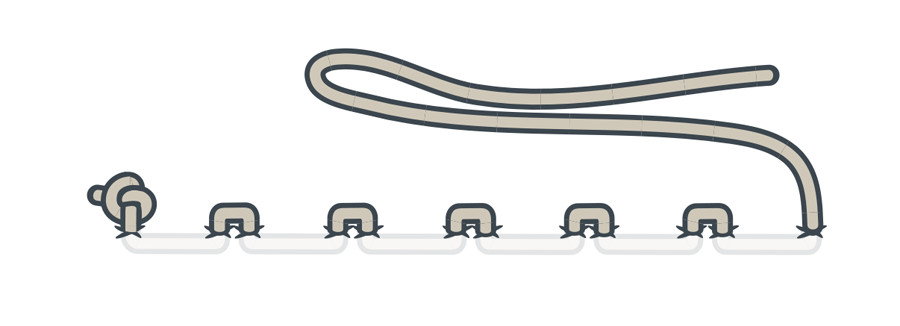
In a basic running stitch, the stitching is even on both sides of the fabric.
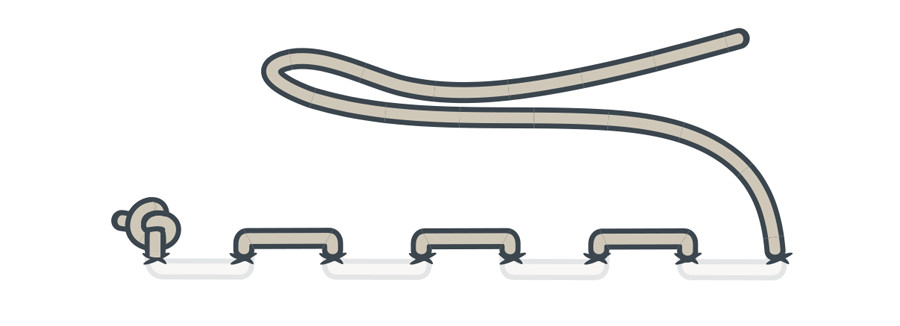
To hide your stitches so they are not visible on the outside of the project, make a longer stitch on the back and a very small stitch on the front. This technique is called a “hidden stitch.”
As you sew, flip your fabric over occasionally to make sure the conductive thread isn’t getting knotted or tangled. If you are just starting out with sewing, it may take some practice before it feels comfortable. Be patient and take your time. If your thread breaks, you can stitch onto existing conductive thread to continue the electrical connection.
Connecting LilyPad Pieces
Both running and hidden stitches let you connect LilyPad components with a single length of conductive thread. To connect two LilyPad pieces, continue stitching after completing three to four loops around the first sew tab. To connect more than two pieces, instead of trimming your thread and starting over, simply continue stitching to the next piece, make three to four loops, and repeat. There is no need to use a new length of thread if the pieces share a connection.

Checking for Conductive Thread Short Circuits
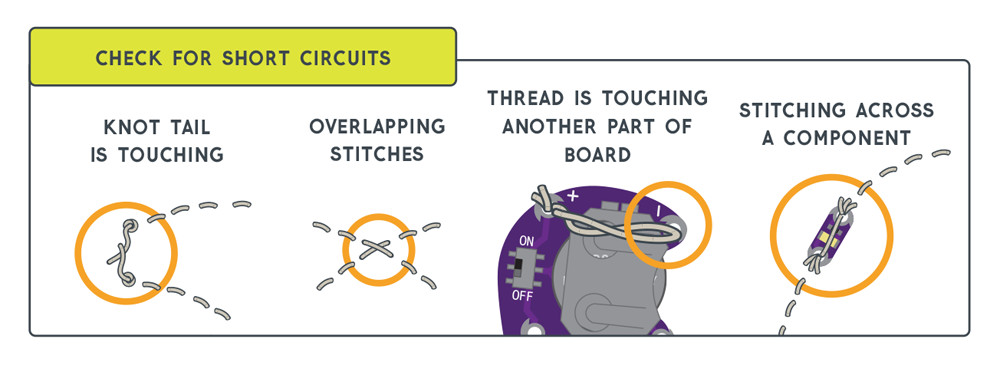
Watch out for any loose threads or knot tails in your project. If any piece of conductive thread from the positive (+) side of your circuit accidentally touches the negative (–) side, it can cause a short circuit. A short circuit connects the battery directly to itself and bypasses the rest of your project, drawing an unwanted amount of current from the battery. Stitching directly over stitches in another part of the circuit can also cause a short.
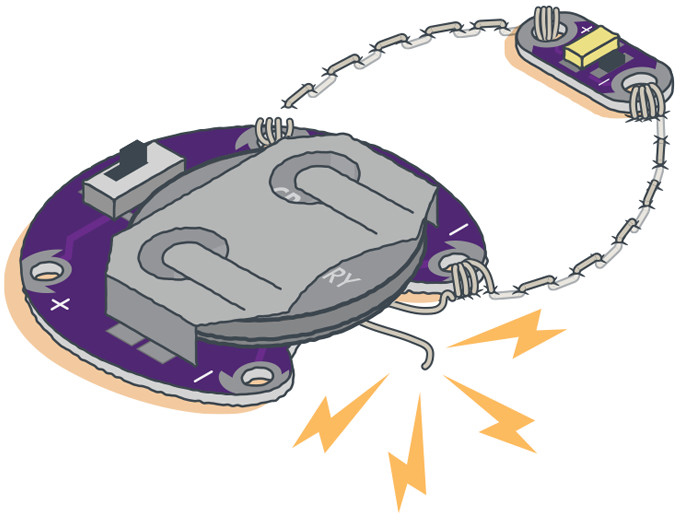
One of the most common short circuits in e-sewing happens when a loose thread tail near the negative tab on the battery holder touches the battery. Always check your stitching before powering your project.
Make sure your stitches do not cross over each other or touch other parts of the circuit. The batteries used in these projects shouldn’t burn or shock you if they short circuit (though they may heat up), but higher-voltage projects or power sources could be dangerous.
Installing Your Battery and Testing Your Finished Circuit
Once all your pieces are connected with conductive thread, your finished circuit needs a power source. Install your coin cell battery, positive (+) side up, into the battery holder. The image below shows how to place a battery in a LilyPad Coin Cell Battery Holder.
Always remove your battery if you need to continue working on your project, to avoid damaging your components.
After completing the conductive thread connections, switch your circuit on and see what it can do! If the circuit doesn’t work, you may have a short, a loose connection, a reversed component, or something as simple as a dead battery.
When you turn on the battery holder switch, current flows through the conductive thread to the other parts of your circuit.
Troubleshooting
As you work on e-sewing projects, you may run into problems such as loose connections that keep LEDs from lighting or cause your circuit to malfunction. Most LilyPad tutorials have a troubleshooting section to help you identify and fix these problems.
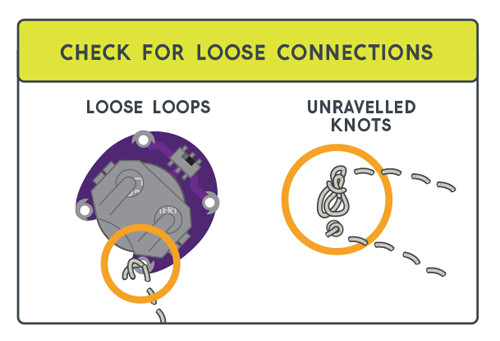
Circuit only working sometimes? Check for loose connections.
If the conductive thread isn’t making a tight connection to the LilyPad sew tabs, current won’t flow consistently. If the project moves, the thread may pull away from the sew tab and break the circuit. To fix this, pull the stitching tight with tweezers or a needle if possible. You can also sew over existing thread to create more tension and hold it securely to the sew tab.
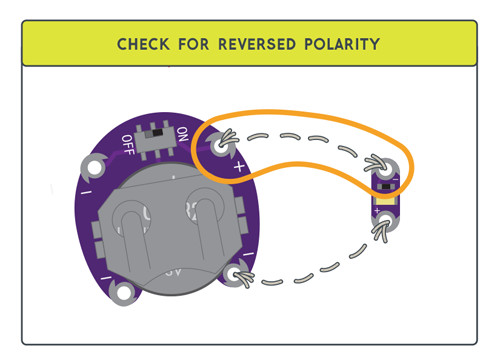
Circuit not working? Double-check your polarity.
Some LilyPad components are polarized, meaning current can only flow through them in one direction. If sewn into the circuit incorrectly, they will not function. Double-check the labeled sew tabs before you stitch to make sure they are oriented correctly.
Other issues to check:
- Make sure the switch on your battery holder is in the ON position.
- Check whether your battery is dead. You can test it with a multimeter. Try installing a spare battery.
- If following a project template, double-check that the components are connected in the right configuration.
LilyPad Sewable Electronics Projects: